
Businesses must adopt artificial intelligence to stay competitive. AI automates tasks, speeds up workflows, and uncovers hidden data insights. However, building AI solutions is hard. Many companies know they need AI, but do not know how to build it. Poorly built AI wastes money and frustrates users.
This is where an AI software development partner steps in. A good partner does more than write code. They guide your project from the first idea to the final launch. They provide a complete lifecycle of strategy, testing, engineering, and optimization. Without this structured approach, AI projects fail. They miss deadlines, exceed budgets, and deliver useless results.
If you want to integrate AI into your business, you need to understand the exact services a top-tier development company provides. Here are the six core services your partner must offer.
1. AI Consulting and Strategy
You need a clear plan before you build anything. AI consulting establishes this foundation. Experts analyze your current business processes, data systems, and goals. They identify the exact areas where AI will drive the most value.
A strong consulting phase includes a data readiness audit, a technical feasibility study, and a clear return-on-investment projection. A top-tier partner tells you exactly what AI must do for your specific business. They also help you navigate data privacy laws and ethical AI rules. This strategic alignment stops costly mistakes. It ensures your AI projects drive real business value instead of just chasing new technology trends. You get a clear, actionable roadmap. This roadmap details the exact technologies to use, the delivery timeline, and the specific metrics to track.
2. AI Proof of Concept (PoC)
Once you identify a good use case, you must prove it works. An AI Proof of Concept validates the technical possibility of your idea. Developers build a small, focused, and low-risk version of the solution. They use a small sample of your real data to test the core algorithms and check your data pipelines.
This step identifies technical roadblocks early. A PoC answers one critical question: Can we build this with our current data and systems? You validate your hypothesis without spending a massive amount of time or money. If the PoC fails, you learn quickly and pivot. If it succeeds, you move forward with confidence. You receive a clear report detailing the technical viability, the required infrastructure, and the estimated costs for full-scale production.
3. AI-Powered Minimum Viable Product (MVP)
A PoC tests the technical possibility. An AI-powered Minimum Viable Product tests market value. An MVP is a fully functional, streamlined version of your product. It delivers core value to your early users.
Developers build a usable application with essential AI features and a basic, intuitive user interface. The main goal here is speed. You get a working AI solution into the hands of real users quickly. This allows you to gather real feedback and see how people actually interact with the AI. You validate product-market fit before you build the final version. You track user engagement, measure task completion rates, and collect direct feedback to guide the next development sprint. This feedback loop tells your team exactly which features to build, which to change, and which to drop. You build the right product the first time.
4. End-to-End AI Software Development
This is the main engineering phase. Once the MVP proves its value, the team builds, scales, and deploys the full AI application. End-to-end AI software development includes custom architecture design, strong backend engineering, and seamless integration with your existing systems like ERPs and CRMs.
The team also implements Machine Learning Operations. This practice allows your team to monitor, retrain, and deploy AI models continuously without breaking your current systems. A professional development team prioritizes enterprise-grade security and scalability. They run rigorous load testing, security penetration tests, and user acceptance testing to guarantee a flawless launch. They ensure your solution handles real-world production loads safely. You get a robust, custom-built application that fits perfectly into your daily operations and grows as your business grows.
5. AI Model Fine-Tuning
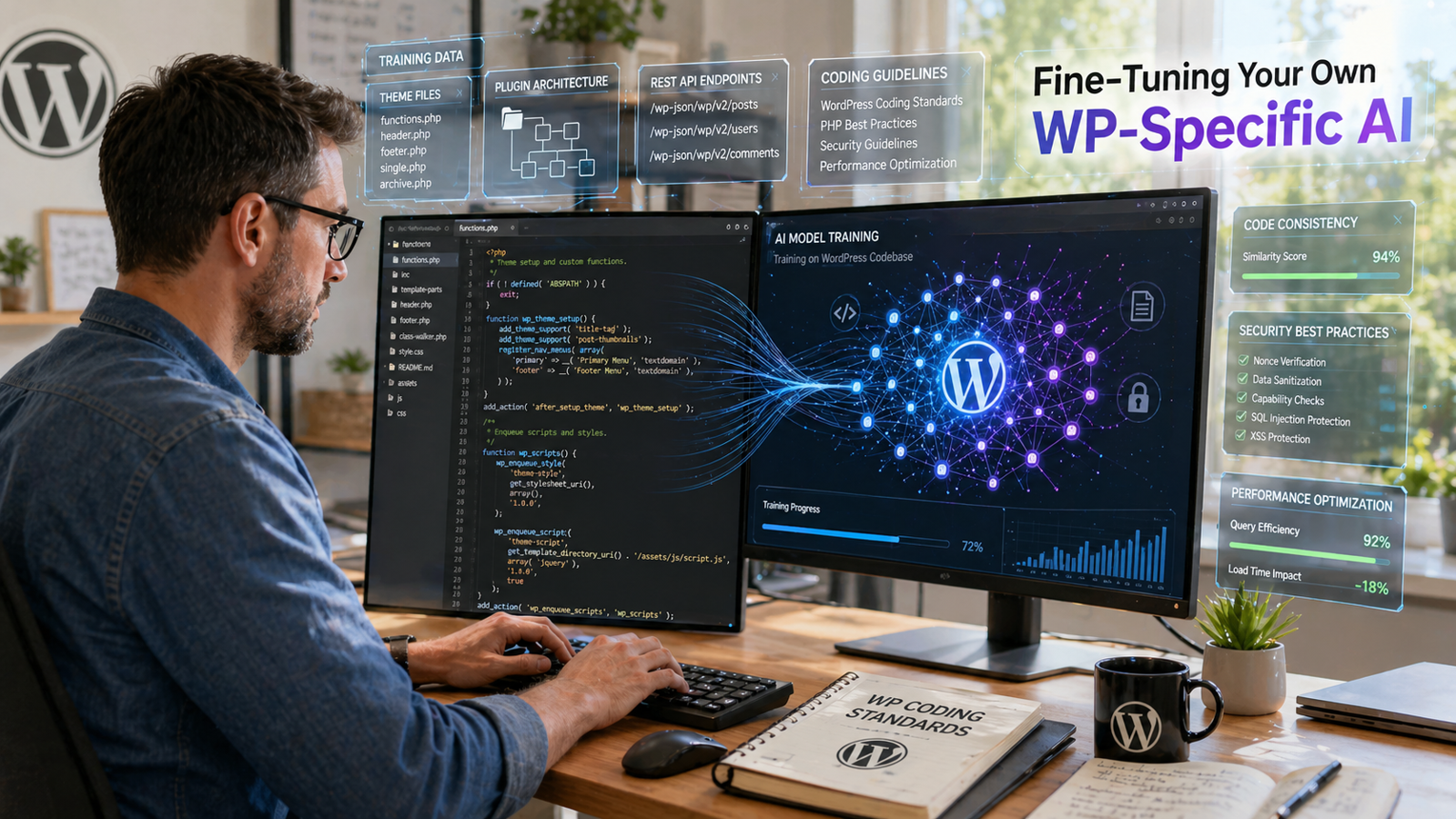
Pre-trained AI models are powerful, but they lack your specific business context. They do not know your company terminology or your unique business rules. Generic models produce generic answers. AI fine-tuning fixes this problem.
Developers take an existing, pre-trained model and train it further using your specific, industry-relevant data. They ensure all proprietary data remains secure and private during the training process, maintaining strict compliance with industry regulations. They also build systems to connect the AI directly to your live, private data. Fine-tuning drastically improves the accuracy and reliability of the AI. It stops the AI from making things up. Furthermore, a well-tuned, smaller model beats a massive, generic model. It also costs much less to run. You get highly accurate, specific AI outputs that your team can actually trust.
6. Generative AI Solutions
Generative AI does much more than write simple text. It automates complex tasks, improves customer experiences, and speeds up creative work. A strong AI development partner builds custom Generative AI solutions for your exact needs.
They build intelligent chatbots that understand context and handle complex customer support. They create automated tools that read, parse, and summarize long legal or financial documents. They build systems that generate personalized marketing content or assist your internal coding teams. They integrate these tools directly into your existing software ecosystem, ensuring a seamless user experience without requiring your staff to learn entirely new platforms. Generative AI directly increases your productivity and operational efficiency. It takes repetitive, manual work away from your human staff. Your team then focuses on high-value, strategic tasks that actually drive your business forward.
Choose the Right Partner
Navigating the AI landscape requires a partner who understands both the technology and your business. When evaluating an AI software development company, look for a team that offers the full spectrum of services. You need a partner who guides you from the initial consulting phase through post-launch fine-tuning and maintenance.
AI is not a one-size-fits-all tool. With the right strategic partner, it becomes the ultimate catalyst for your company’s growth. The right partner brings deep technical expertise, industry knowledge, and a proven track record of successful deployments. They act as an extension of your own team, aligning their goals with your business objectives. Do not settle for generic tools or inexperienced vendors. Demand a partner who delivers measurable results. Evaluate your needs, choose a definitive partner, and start building your AI future today.



Write a comment ...